Colostrum Calming Complex
calming
Many pet owners seek natural solutions for their companions' anxiety and stress. Among these, colostrum calming complexes have gained attention. These supplements leverage components found in colostrum, the initial milk produced by mammals, to support a pet's emotional well-being. This article explores what colostrum calming complexes are, how they work, their potential benefits for dogs and cats, appropriate dosages, and important safety considerations.
Understanding C3–Colostrum Calming Complex
C3, or Colostrum Calming Complex, is a specific type of ingredient derived from bovine colostrum. It's not simply raw colostrum, but a specialized fraction containing bioactive peptides. These peptides are thought to interact with receptors in the brain, influencing neurotransmitter activity to promote a sense of calm without sedation. The "calming complex" part refers to this targeted extraction and concentration of the anxiety-reducing components.
For dogs experiencing anxiety related to noise phobias, separation, travel, or vet visits, a C3-based supplement aims to help them cope more effectively. Instead of merely masking symptoms, the idea is to support the body's natural ability to manage stress. This differs from sedatives, which typically depress the central nervous system. C3 aims to modulate the nervous system, helping pets achieve a more balanced state.
The practical implications involve understanding that C3 isn't an immediate knockdown agent. Its effects are often subtle and build over time, or become noticeable during specific stressful events. For instance, a dog with thunderstorm phobia might still react to the storm, but potentially with less intensity or for a shorter duration, if C3 is administered proactively. It's not a cure for behavioral issues, but rather a supportive tool to help manage anxiety.
Calming® for Dogs and Cats
"Calming®" is a product line often associated with colostrum calming complexes, particularly from brands like Pet Naturals. This line typically features a blend of ingredients, with colostrum calming complex as a key component. Other ingredients often include L-Theanine, Thiamine (Vitamin B1), and sometimes herbal extracts like chamomile or lemon balm. The rationale behind combining these ingredients is to create a , where each component contributes to stress reduction through different pathways.
For example, while colostrum calming complex may modulate brain receptors, L-Theanine, an amino acid found in green tea, is known to promote alpha brain wave activity, which is associated with a relaxed but alert state. Thiamine plays a role in nerve function and can be depleted during stress. This multi-ingredient approach aims for broader support for the nervous system.
The practical implications for pet owners are that "Calming®" products are designed for a range of stress-inducing situations. A cat prone to stress during car rides might benefit from a dose before travel, or a dog with general nervousness might receive daily supplementation. The trade-off is that with multiple ingredients, identifying the exact contribution of each component can be challenging. If a pet responds well, it's the combination that works. If not, pinpointing which ingredient is ineffective or problematic becomes more complex. It's generally a gentle approach, and suitable for long-term use in many cases, but individual pet responses will vary.
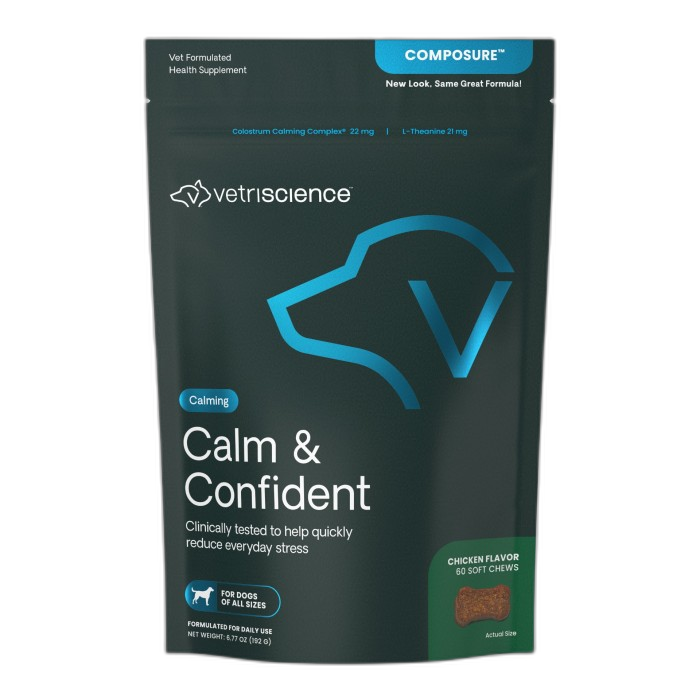
VetriScience Calm & Confident Dog Supplement
VetriScience's Calm & Confident line often features a colostrum calming complex as a primary ingredient, along with other complementary components. Their approach typically emphasizes a formula designed to address both immediate stress and underlying nervousness. The "Calm & Confident" name itself suggests a dual goal: to reduce acute anxiety and foster a more self-assured demeanor over time.
This particular supplement often includes L-Theanine and Thiamine, similar to other calming formulations. The specific ratios and forms of these ingredients can differ between brands, potentially influencing efficacy. For instance, the source and purity of the colostrum extract can impact the concentration of active peptides.
For pet owners, this means evaluating the specific formulation of VetriScience products. If a dog struggles with chronic anxiety, a daily regimen might be recommended. For situational stress, such as fireworks, administering the supplement shortly before the event might be more effective. A key consideration is consistency. Like many supplements, the full benefits may not be apparent after a single dose, especially for ongoing behavioral challenges. Owners should monitor their pet's behavior closely and discuss any concerns or lack of improvement with a veterinarian. The emphasis is on supporting the pet's natural coping mechanisms rather than sedating them.
Top Benefits of Colostrum for Dogs
Colostrum, in its broader sense, offers a range of potential benefits beyond just calming. While the "calming complex" specifically targets anxiety, general colostrum supplementation can support overall health. Here are some of the key benefits attributed to colostrum for dogs:
It's important to distinguish between general colostrum supplements, which offer broad benefits, and specific "colostrum calming complex" formulations, which are concentrated for anxiety support. While a general colostrum supplement might indirectly help a stressed dog by improving overall health, a dedicated calming complex is formulated for direct neurological calming effects.
Veterinary Strength Calm & Confident for Dogs and Cats
The term "Veterinary Strength" often indicates a formulation with higher concentrations of active ingredients or a specific blend endorsed or utilized by veterinarians. In the context of "Calm & Confident," this suggests a product designed for more pronounced or consistent results, potentially for pets with more significant anxiety challenges.
These formulations typically contain the Colostrum Calming Complex (C3), L-Theanine, and Thiamine, but the "veterinary strength" designation might imply a higher dose of these active compounds per chew or tablet. This can be beneficial for larger dogs or pets with more severe anxiety, as it allows for effective dosing without requiring an excessive number of chews.
For pet owners, "Veterinary Strength" products might be recommended by their veterinarian for specific cases, especially if over-the-counter or lower-dose options haven't yielded sufficient results. The practical implications include carefully following the dosage instructions, as higher concentrations mean less margin for error. It's also crucial to consider the pet's size and the severity of their anxiety when choosing a strength. While potentially more effective, these products are still supportive supplements, not sedatives. They aim to normalize the pet's response to stress rather than eliminate all reactivity. Discussing the use of "veterinary strength" supplements with a vet is always advisable to ensure it's the right choice for a particular pet's health profile and anxiety level.
COMPOSURE™ for Colostrum Calming Complex for Dogs
COMPOSURE™ is another prominent brand in the pet calming supplement market, often featuring a colostrum calming complex among its active ingredients. Like other multi-ingredient formulations, COMPOSURE™ typically combines C3 with other calming agents such as L-Theanine and Thiamine. The specific blend and ratios are proprietary to the brand, aiming to provide a comprehensive approach to stress and anxiety management.
The product is designed to be fast-acting for situational stress, but also suitable for daily use to manage ongoing anxiety. This flexibility makes it appealing for various scenarios, from occasional car trips to chronic separation anxiety. The mechanism of action relies on the of its components: C3 modulating neurological pathways, L-Theanine promoting relaxation without drowsiness, and Thiamine supporting nervous system health.
For pet owners considering COMPOSURE™, it's important to evaluate the specific formulation and dosage instructions for their pet's size and needs. The product is generally well-regarded for its palatability, often coming in flavored chews, which can be a significant advantage for administering supplements to finicky pets. As with any calming supplement, consistent observation of the pet's response is key. Owners should look for subtle changes in behavior, such as a reduction in panting, pacing, destructive behaviors, or excessive vocalization during stressful events. While COMPOSURE™ aims to provide effective relief, it's not a substitute for behavioral modification techniques or veterinary consultation for severe anxiety disorders.
Colostrum Calming Complex: Dosage and Safety
Understanding proper dosage and safety considerations is paramount when using colostrum calming complex for dogs and cats.
Dosage Guidelines
Dosage for colostrum calming complex products varies significantly based on the specific product, the concentration of active ingredients, and the pet's weight. Always refer to the manufacturer's instructions on the product packaging.
Here's a general guide, but always consult the specific product label and your veterinarian:
| Pet Weight (Approx.) | Typical Dog Dosage (e.g., chews/day) | Typical Cat Dosage (e.g., chews/day) | Notes |
|---|---|---|---|
| Under 10 lbs | 0.5 - 1 chew | 0.5 - 1 chew | Cats and very small dogs often require lower doses. |
| 10-25 lbs | 1 chew | Not typically applicable | |
| 26-50 lbs | 1-2 chews | Not typically applicable | For situational stress (e.g., vet visit, fireworks), a dose can often be given 30-60 minutes before the event. For ongoing anxiety, daily administration is common. |
| 51-100 lbs | 2-3 chews | Not typically applicable | Some products recommend splitting the daily dose (e.g., half in the morning, half in the evening) for consistent support. |
| Over 100 lbs | 3-4 chews | Not typically applicable | Always start with the lowest recommended dose and observe your pet's response. You can gradually increase to the maximum recommended dose if needed, under veterinary guidance. |
| Important: | Always follow product label. | Always follow product label. | Consistency is key for chronic anxiety. Effects may not be immediate; allow a few days to weeks to assess full impact. Consult your veterinarian before starting any new supplement, especially if your pet has underlying health conditions or is on other medications. Overdosing can lead to digestive upset (diarrhea, vomiting) or mild lethargy, though severe side effects are rare with colostrum calming complex. |
Safety Considerations
Colostrum calming complexes are generally considered safe for most dogs and cats when administered according to instructions. However, there are several safety points to keep in mind:
- Allergies: While bovine colostrum is generally well-tolerated, some pets might have allergies to dairy products. Monitor for signs of an allergic reaction, such as itching, hives, swelling, or digestive upset. If dairy is a concern, consult your vet before use.
- Digestive Upset: The most common side effect reported, particularly with higher doses, is mild digestive upset like diarrhea or soft stools. This usually resolves by reducing the dose or discontinuing use.
- Lethargy/Sedation: While the goal is not sedation, some pets, especially sensitive individuals, might show mild lethargy. This is rare with colostrum calming complex alone but could occur, especially if combined with other calming agents or if an unusually high dose is given.
- Interactions with Medications: Although colostrum calming complex is generally considered safe, discuss its use with your veterinarian if your pet is on any other medications, especially sedatives, anxiolytics, or medications for seizure disorders. While interactions are unlikely, it's always best to be cautious.
- Underlying Health Conditions: Pets with pre-existing conditions, particularly kidney or liver disease, or those with compromised immune systems, should only receive supplements under veterinary supervision.
- Pregnancy and Lactation: The safety of colostrum calming complex in pregnant or lactating animals has not been extensively studied. Consult your veterinarian before administering to pregnant or nursing pets.
- Product Quality: Choose reputable brands that conduct third-party testing and provide clear labeling. The quality and purity of colostrum can vary significantly.
- Not a Cure-All: Colostrum calming complex is a supportive supplement, not a cure for severe behavioral disorders. For significant anxiety, phobias, or aggression, a comprehensive approach involving veterinary consultation, behavioral modification, and potentially prescription medication may be necessary.
Always introduce any new supplement gradually and observe your pet closely for any adverse reactions. When in doubt, a conversation with your veterinarian is the best course of action to ensure the safety and appropriateness of colostrum calming complex for your specific dog or cat.
FAQ
Does colostrum help dogs with anxiety?
Yes, a specific component known as Colostrum Calming Complex (C3), derived from bovine colostrum, is believed to help dogs with anxiety. It contains bioactive peptides that interact with brain receptors to promote a sense of calm without causing sedation. Many calming supplements for dogs include C3 for this purpose.
What does colostrum do for a dog?
Colostrum offers several benefits for dogs:
- Immune System Support: Rich in antibodies and immune factors.
- Gut Health: Promotes beneficial gut bacteria and helps repair the intestinal lining.
- Anti-inflammatory: Contains compounds like lactoferrin with anti-inflammatory properties.
- Wound Healing: Growth factors aid in cell repair.
- Anxiety Reduction: The Colostrum Calming Complex (C3) specifically helps to modulate the nervous system for a calming effect.
- Overall Vitality: Contributes to general well-being by supporting foundational health.
What are the side effects of colostrum for dogs?
Colostrum, particularly the calming complex, is generally well-tolerated. The most common side effect is mild digestive upset, such as soft stools or diarrhea, especially if given in higher doses. In rare cases, some pets might experience mild lethargy. Allergic reactions to dairy, though uncommon, are also possible (e.g., itching, hives, swelling). It's always best to start with a low dose and monitor your pet for any adverse reactions, and consult your veterinarian if you have concerns or if your pet has underlying health conditions.
Conclusion
Colostrum calming complexes offer a natural, supportive approach to managing anxiety and stress in dogs and cats. By leveraging bioactive peptides from bovine colostrum, often alongside other calming ingredients like L-Theanine and Thiamine, these supplements aim to promote a relaxed state without sedation. While generally safe and well-tolerated, understanding proper dosage, potential benefits beyond simple calming, and key safety considerations is essential. For pet owners seeking to support their companion's emotional well-being, especially for situational or mild to moderate anxiety, a colostrum calming complex can be a valuable tool. However, always consult with a veterinarian to ensure it's the right choice for your pet, particularly for severe anxiety or if your pet has existing health conditions or is on other medications.
Products Containing Colostrum Calming Complex
Top-rated supplements featuring this ingredient, ranked by our PSI+ score.

Pet Naturals BusyButter Easy Squeeze Calming Peanut Butter
Pet Naturals

Vetriscience Composure Pro for Dogs
VetriScience
VetriScience Composure Calming Chews for Dogs
VetriScience

VetriScience Composure Behavioral Health Calming Supplement for Dogs
VetriScience

Pet Naturals Calming for Dogs
Pet Naturals